In a world obsessed with innovation and progress, we often overlook the profound wisdom accumulated over millennia that holds transformative power for our modern challenges.

Ancient civilizations, from the Stoics of Rome to the Zen masters of Japan, developed sophisticated systems for living that addressed the fundamental human experiences we still face today: stress, purpose, relationships, and the pursuit of meaning. These time-tested philosophies weren’t preserved by accident—they survived because they worked, because they spoke to something eternal in the human condition that transcends technological advancement and cultural shifts.
The beauty of ancient wisdom lies not in its antiquity but in its practical applicability. While our ancestors didn’t have smartphones or social media, they grappled with anxiety, ambition, loss, and the search for fulfillment in ways that mirror our contemporary struggles. By integrating their insights into our daily routines, we can create a powerful synergy between timeless principles and modern possibilities.
🏛️ Why Ancient Wisdom Remains Remarkably Relevant
The accelerating pace of modern life has created unprecedented levels of stress, disconnection, and existential confusion. We’re more connected than ever yet feel increasingly isolated. We have access to unlimited information but struggle with decision-making. We’ve achieved material prosperity that our ancestors could barely imagine, yet depression and anxiety rates continue climbing.
Ancient wisdom traditions offer something our hyperconnected world desperately needs: depth over breadth, presence over productivity, and meaning over mere achievement. These philosophical frameworks were developed through centuries of observation, experimentation, and refinement—essentially A/B testing conducted across generations.
Consider the Stoic practice of negative visualization, where practitioners regularly contemplate loss and adversity. This might seem pessimistic to our positivity-obsessed culture, but research in modern psychology validates its effectiveness for building resilience and gratitude. Similarly, Buddhist mindfulness practices, refined over 2,500 years, have been scientifically proven to rewire neural pathways and reduce stress.
The Stoic Framework for Modern Decision-Making
Stoicism, the ancient Greek and Roman philosophy practiced by emperors and slaves alike, provides an extraordinarily practical framework for navigating modern complexity. At its core lies the dichotomy of control—the recognition that some things are within our power and others are not.
In your professional life, this means focusing energy on your effort, preparation, and attitude rather than obsessing over outcomes you can’t fully control. When facing a job interview, presentation, or business negotiation, Stoic wisdom directs you to perfect your skills and approach while releasing attachment to specific results.
Marcus Aurelius, who ruled the Roman Empire while practicing Stoicism, wrote in his personal journal (now known as “Meditations”) about distinguishing between what he could influence and what he must accept. This wasn’t passive resignation but strategic energy allocation—a concept modern productivity experts rediscover constantly.
Implementing Stoic Practices Daily
Start each morning with a version of the Stoic premeditation exercise. Spend five minutes considering potential challenges you might face during the day—not to generate anxiety, but to mentally rehearse responses. This ancient practice essentially creates mental insurance policies against emotional reactivity.
Throughout your day, practice the Stoic pause: before reacting to frustrating situations, ask yourself whether this circumstance is within your control. If not, consciously redirect your emotional energy toward constructive action within your sphere of influence.
Evening reflection, another Stoic discipline, involves reviewing your day without judgment—noting where you acted according to your values and where you fell short. This isn’t about self-criticism but honest self-assessment, a practice that builds genuine self-awareness more effectively than any motivational content.
⚖️ Eastern Philosophy: The Art of Balance and Flow
While Western Stoicism emphasizes rational control and discipline, Eastern philosophies like Taoism and Buddhism offer complementary wisdom about acceptance, flow, and working with natural rhythms rather than against them.
The Taoist concept of wu wei—often translated as “effortless action” or “non-forcing”—teaches that maximum effectiveness comes from aligning with natural patterns rather than muscling through resistance. In modern terms, this means recognizing when to push forward and when to pivot, when to speak and when to listen, when to act and when to allow.
This ancient principle directly counters our cultural obsession with constant hustle and forcing outcomes. The most successful entrepreneurs often describe breakthrough moments that came not from grinding harder but from stepping back, creating space, and allowing solutions to emerge—unconsciously practicing ancient Taoist wisdom.
Mindfulness: Ancient Practice, Modern Neuroscience
Buddhist mindfulness meditation, developed over millennia, has been validated by contemporary neuroscience as one of the most effective interventions for mental health, focus, and emotional regulation. The practice isn’t about emptying your mind or achieving some mystical state—it’s about training attention and developing metacognitive awareness.
Regular mindfulness practice literally changes brain structure, increasing gray matter density in regions associated with learning, memory, and emotional regulation while decreasing density in the amygdala, the brain’s fear center. This ancient technology for mind-training offers powerful advantages in our attention-deficit world.
Integrate mindfulness into your routine not as another task but as a different way of doing what you’re already doing. Mindful eating transforms meals from distracted fuel-ups into sensory experiences. Mindful walking converts commute time into meditation. Mindful listening deepens relationships and professional effectiveness.
Indigenous Wisdom: Connection and Community
Indigenous cultures worldwide developed sophisticated understanding of community, connection to nature, and sustainable living—wisdom increasingly relevant as we confront environmental crisis and social fragmentation.
The Ubuntu philosophy from Southern Africa—”I am because we are”—offers a powerful counterbalance to extreme Western individualism. This worldview recognizes that individual flourishing is inseparable from community wellbeing, a truth modern research on happiness and longevity consistently validates.
In practical terms, this means intentionally investing in community relationships, considering collective impact alongside personal gain, and recognizing interdependence rather than pretending we’re self-made individuals. The most fulfilled people aren’t those who’ve achieved the most individually but those embedded in supportive, meaningful communities.
📚 Ancient Reading Lists for Modern Challenges
Certain ancient texts function as operating systems for human consciousness, offering frameworks that remain perpetually relevant. These aren’t museum pieces to admire from distance but practical manuals for living.
The Bhagavad Gita addresses the fundamental tension between action and detachment, offering guidance for performing your duties without being consumed by anxiety about results. The Tao Te Ching provides 81 short chapters of paradoxical wisdom about leadership, strategy, and natural principles. The Meditations of Marcus Aurelius offers raw, unfiltered thoughts of someone carrying tremendous responsibility while trying to maintain inner peace.
These texts reward repeated reading. Unlike contemporary books designed for single-pass consumption, ancient wisdom literature reveals deeper layers with each encounter, meeting you where you are in your development and offering what you’re ready to receive.
🧘 Creating Your Personal Wisdom Practice
Integrating ancient wisdom into modern life doesn’t require abandoning contemporary tools or adopting ancient lifestyles wholesale. The goal is thoughtful synthesis—identifying principles that resonate and finding practical applications within your actual circumstances.
Start by selecting one tradition or practice that genuinely appeals to you. Trying to implement insights from multiple philosophical systems simultaneously often leads to confusion and abandonment. Instead, go deep with one approach for at least three months before expanding.
The Morning Wisdom Ritual
Design a morning practice that grounds you in ancient wisdom before the modern world makes its demands. This might include reading a passage from a philosophical text, practicing brief meditation or contemplation, and setting intentions aligned with your deeper values.
The specific components matter less than consistency and genuine engagement. A five-minute practice you actually do daily trumps an elaborate routine you repeatedly abandon. Remember, these traditions were developed by practical people facing real challenges, not academic exercises for ideal conditions.
Ancient Strategies for Modern Relationships
Perhaps nowhere is ancient wisdom more applicable than in relationships, where human nature remains fundamentally unchanged despite technological transformation. Confucian teachings on respect, reciprocity, and role-appropriate behavior offer sophisticated frameworks for navigating complex social dynamics.
The Confucian concept of ren—often translated as humaneness or benevolence—emphasizes cultivating genuine care for others as the foundation of all relationships. In our transactional, networking-obsessed culture, this ancient principle invites us to prioritize authentic connection over strategic advantage.
Buddhist teachings on compassion and non-attachment provide guidance for loving without clinging, caring without controlling—a delicate balance modern relationships desperately need. These practices don’t make you weak or passive but liberate tremendous energy previously wasted on attempts to control what cannot be controlled.
💼 Timeless Principles for Professional Success
Ancient wisdom traditions consistently emphasize mastery, service, and integrity over shortcuts and superficial markers of success. The Japanese concept of ikigai—your reason for being, found at the intersection of what you love, what you’re good at, what the world needs, and what you can be paid for—offers a holistic framework for career development.
Rather than chasing trends or optimizing for short-term gains, this approach encourages patient development of genuine expertise aligned with authentic values. The craftsman philosophies found across cultures—whether Japanese shokunin, medieval guild traditions, or Confucian emphasis on cultivation—all recognize that meaningful work comes from dedication to excellence beyond economic calculation.
In practical application, this means choosing depth over breadth in skill development, prioritizing reputation and relationships over quick wins, and defining success by standards of craft and contribution rather than purely financial metrics.
Integrating Contemplative Practice Into Busy Schedules
The most common objection to ancient wisdom practices is lack of time. Ironically, these traditions were often developed by people with demanding responsibilities—emperors, monks with rigorous schedules, peasants working dawn to dusk.
The solution isn’t finding more time but transforming existing activities. Commute time becomes meditation practice. Meals become mindfulness exercises. Difficult conversations become opportunities for practicing virtue. Exercise becomes moving meditation.
Monastic traditions developed elaborate systems for integrating contemplation into daily work through practices like mindful labor. Medieval monks didn’t separate “spiritual time” from “work time”—they brought contemplative awareness to copying manuscripts, farming, and administrative duties.
🌟 Measuring Progress on the Ancient Path
Modern culture obsesses over metrics, KPIs, and quantifiable progress. Ancient wisdom traditions suggest different measurement systems—ones that can’t be gamified or optimized through hacks but require genuine transformation.
Stoics measured progress through equanimity in the face of adversity. Buddhists track development in awareness and compassion. Confucians assess advancement in virtue and relationship quality. These internal metrics prove more challenging to measure but ultimately more meaningful than external markers.
Notice whether you react less intensely to frustrations. Observe whether you’re more present with loved ones. Pay attention to whether your decisions increasingly align with stated values. These subtle shifts indicate genuine integration of ancient wisdom, not just intellectual understanding.
Building Community Around Timeless Values
While you can practice ancient wisdom individually, community amplifies and sustains these practices. Ancient philosophical schools weren’t solitary pursuits but communal endeavors—the Stoics had their schools, Buddhists their sanghas, Confucians their study circles.
Modern equivalents might include philosophy discussion groups, meditation communities, or simply informal gatherings of friends committed to deeper conversations than typical social interactions allow. These communities provide accountability, perspective, and shared exploration that accelerates individual development.
Technology enables connection with like-minded practitioners globally. Online forums, video study groups, and social media communities dedicated to ancient wisdom create access to teachers and fellow students that would have been impossible in previous eras.
⚡ The Synergy of Ancient Wisdom and Modern Tools
Rather than viewing ancient wisdom and modern technology as opposing forces, recognize opportunities for powerful synthesis. Apps can support meditation practice, remind you of philosophical principles, and track habit formation aligned with ancient virtues.
Digital calendars enable implementation of Stoic reflection practices. Note-taking apps preserve insights from ancient texts. Audiobooks make philosophical classics accessible during commutes. The tools themselves are neutral—what matters is intentionality in their application.
The key distinction is using technology as servant rather than master. Ancient wisdom provides the “why” and “what” while modern tools offer efficient “how.” Without the grounding principles, tools become distractions. With clear philosophical direction, they become force multipliers.
Living the Examined Life in Modern Times
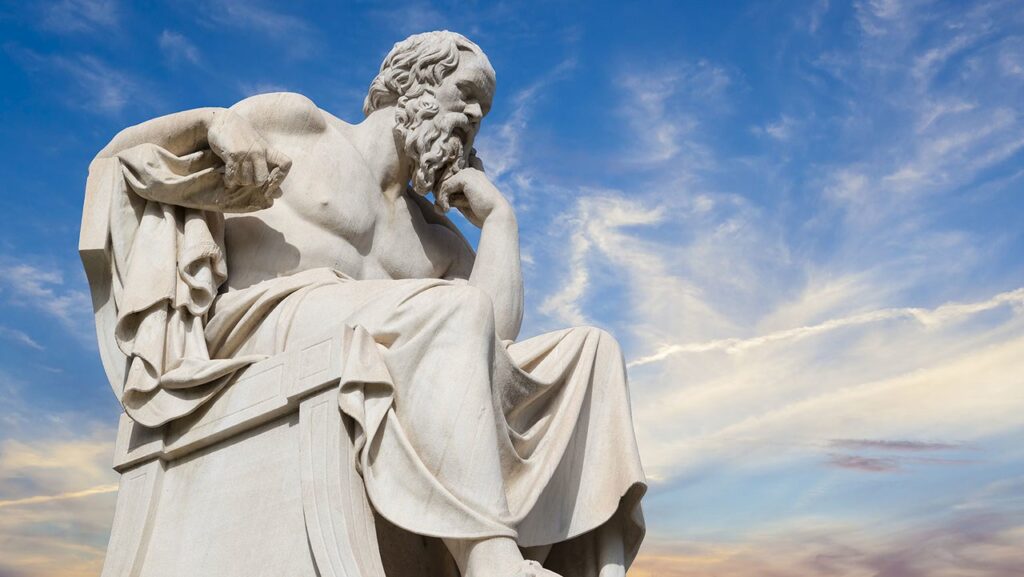
Socrates famously declared that “the unexamined life is not worth living.” This ancient imperative toward self-reflection and conscious living remains the foundation of integrating wisdom into modern existence.
Regular self-examination—whether through journaling, meditation, or contemplative practices—creates the awareness necessary for intentional living. Without this reflective capacity, we simply react to circumstances, allowing external forces and unconscious patterns to dictate our experience.
The examined life doesn’t require perfection or constant self-analysis. It simply means periodically stepping back to assess whether your daily actions align with deeper values, whether you’re growing toward your highest aspirations, and whether your life reflects genuine choice or mere habit and conditioning.
As you integrate these timeless principles into your modern existence, remember that ancient wisdom offers not rigid rules but flexible frameworks—not dogma to memorize but practices to embody. The philosophers, sages, and masters who developed these traditions did so through experimentation, failure, and persistent refinement. They invite you into that same process of discovery.
Your life becomes the laboratory where ancient principles meet contemporary challenges. Some practices will resonate immediately while others require patient cultivation. Some traditions will speak to your temperament while others remain interesting but ultimately unsuited to your path. This selectivity isn’t failure but wisdom itself—discerning what serves your genuine development versus what merely sounds impressive.
The ultimate measure of successfully integrating ancient wisdom isn’t how many practices you adopt or how many philosophical texts you’ve read. It’s whether you’re living with greater intention, responding to challenges with more wisdom, treating others with deeper compassion, and experiencing life with fuller presence. These internal transformations, invisible to external metrics, represent the true fulfillment that humans have sought across centuries—and which ancient wisdom uniquely positions you to achieve.