For centuries, humanity has stood at the crossroads where science meets spirituality, often viewing them as opposing forces rather than complementary pathways to truth.

The divide between these two powerful ways of understanding our existence has created unnecessary barriers in our collective journey toward wisdom. Yet, as we advance further into the 21st century, an exciting transformation is taking place—one that reveals the profound connections between scientific discovery and spiritual insight, inviting us to embrace a more holistic understanding of reality.
This integration isn’t about diluting either discipline but rather about recognizing that both spirituality and science seek to answer fundamental questions about who we are, where we came from, and what our place is in this vast universe. When we unlock the power of harmony between these domains, we open doors to revolutionary insights that can transform not only our understanding but also how we live, heal, and grow as individuals and as a society.
🌟 The Historical Divide: Understanding Where We’ve Been
The separation between spirituality and science wasn’t always as pronounced as it is today. Ancient civilizations often blended observation of the natural world with spiritual practice, seeing no contradiction between the two. However, the Age of Enlightenment and the scientific revolution of the 16th and 17th centuries established a paradigm that prioritized empirical evidence and material reality while often dismissing subjective, spiritual experiences as irrelevant or even dangerous to rational thought.
This divide deepened throughout the modern era, creating two distinct cultures: one that values measurable, repeatable phenomena and another that honors inner experience, consciousness, and transcendent truths. Scientists were trained to distrust anything that couldn’t be quantified, while spiritual practitioners often viewed scientific materialism as cold, reductionist, and blind to life’s deeper meanings.
The consequences of this separation have been significant. Medical science, for example, developed treatments that addressed physical symptoms while often ignoring the emotional and spiritual dimensions of healing. Meanwhile, spiritual communities sometimes rejected valuable scientific insights, creating echo chambers where unproven claims went unchallenged.
The Quantum Revolution: When Science Met Mystery
Everything began to shift with the advent of quantum physics in the early 20th century. Suddenly, the material world wasn’t as solid and predictable as classical physics had suggested. Scientists discovered that at the subatomic level, particles behaved in ways that defied common sense—existing in multiple states simultaneously, influencing each other instantaneously across vast distances, and even seeming to respond to observation itself.
These discoveries echoed principles that spiritual traditions had taught for millennia: that consciousness plays a fundamental role in reality, that everything is interconnected, and that the universe is far more mysterious and participatory than we’d imagined. Pioneers like physicist Niels Bohr openly acknowledged parallels between quantum mechanics and Eastern philosophy, noting that ancient wisdom traditions had intuited truths that science was only now beginning to verify.
The observer effect, quantum entanglement, and the principle of non-locality all suggested that consciousness and matter aren’t separate domains but intimately connected aspects of a unified reality. This revelation created an opening for dialogue between scientists and spiritual seekers who recognized that they might be exploring the same territory from different vantage points.
💭 Consciousness Studies: The Ultimate Frontier
Perhaps nowhere is the bridge between spirituality and science more evident than in the emerging field of consciousness studies. For decades, mainstream science struggled to explain consciousness using purely materialist frameworks. How does subjective experience arise from objective matter? Why does it feel like something to be you? These questions, known as the “hard problem of consciousness,” have resisted conventional scientific explanation.
Meanwhile, contemplative traditions have spent thousands of years developing sophisticated technologies of consciousness—meditation, prayer, breathwork, and other practices designed to explore the nature of awareness itself. These traditions accumulated vast experiential knowledge about consciousness, attention, perception, and the possibilities for human transformation.
Today, neuroscientists are partnering with meditation masters, using brain imaging technology to study what happens during deep meditative states. The results are remarkable: experienced meditators show measurable changes in brain structure and function, including increased cortical thickness in areas associated with attention and emotional regulation, and decreased activity in the default mode network associated with self-referential thinking.
These studies validate what spiritual practitioners have long known through direct experience while providing scientific frameworks for understanding how and why contemplative practices work. This convergence benefits both domains—science gains access to refined methodologies for studying consciousness, while spiritual practices gain empirical validation and broader credibility.
The Healing Revolution: Integrative Approaches to Wellness
The integration of spirituality and science has profound implications for health and healing. Traditional medical models focused almost exclusively on physical mechanisms—treating the body as a machine with broken parts that needed fixing. While this approach has produced remarkable advances in acute care and surgical interventions, it often falls short when addressing chronic conditions, mental health challenges, and overall wellbeing.
Research into the mind-body connection has revealed that our thoughts, emotions, and beliefs directly influence physical health through complex pathways involving the nervous system, immune function, and genetic expression. The field of psychoneuroimmunology demonstrates that stress, trauma, and emotional states can suppress immune function or trigger inflammation, while positive emotions, social connection, and practices like meditation can enhance healing.
Integrative medicine now embraces approaches that honor both the biological and the biographical—treating the whole person rather than isolated symptoms. Mindfulness-based stress reduction, for example, has been rigorously studied and shown to reduce symptoms of anxiety, depression, chronic pain, and numerous other conditions. Prayer and spiritual support have been linked to better health outcomes, faster recovery from surgery, and improved quality of life for those facing serious illness.
Evidence-Based Spiritual Practices
The scientific validation of spiritual practices has created a new category of interventions that bridge both worlds. Consider these examples backed by research:
- Meditation: Reduces stress hormones, lowers blood pressure, improves immune function, and changes brain structure in beneficial ways
- Gratitude practices: Increase happiness, improve sleep quality, strengthen relationships, and boost overall wellbeing
- Compassion training: Enhances empathy, reduces implicit bias, and activates reward circuits in the brain
- Yoga: Improves flexibility and strength while reducing anxiety, depression, and inflammatory markers
- Prayer and spiritual community: Associated with greater resilience, better health outcomes, and increased longevity
These practices demonstrate that spiritual wisdom and scientific rigor need not conflict—instead, they can inform and strengthen each other, creating more effective approaches to human flourishing.
🔬 The Science of Interconnection: Systems Thinking Meets Spiritual Unity
One of the most profound areas of convergence involves the recognition of fundamental interconnection. Spiritual traditions have long taught that separation is an illusion—that all beings and phenomena are intimately connected within a unified whole. Science, through fields like ecology, systems biology, and network theory, has arrived at strikingly similar conclusions.
Ecosystems function as integrated wholes where every element influences every other element. The human body operates as a complex adaptive system where seemingly separate organs and processes constantly communicate and coordinate. Even at the cosmic scale, astrophysicists describe a universe where every particle has been connected since the Big Bang, evolving together in an ongoing creative process.
This systems perspective transforms how we understand causation and change. Rather than viewing reality as a collection of isolated objects acting upon each other like billiard balls, we recognize patterns, relationships, and emergent properties that arise from interconnection. This view aligns beautifully with spiritual teachings about interdependence and the fundamental unity underlying apparent diversity.
The practical implications are significant. When we recognize our profound interconnection with each other and with the natural world, ethics cease to be abstract rules imposed from outside—they become expressions of enlightened self-interest. Harming others or exploiting nature ultimately harms ourselves because we’re part of the same living system.
Navigating the Integration: Practical Wisdom for Daily Life
Understanding the harmony between spirituality and science isn’t merely an intellectual exercise—it offers practical guidance for living more meaningful, fulfilling lives. When we embrace both scientific rigor and spiritual depth, we develop a more complete toolkit for navigating existence.
This integration encourages us to value both objective measurement and subjective experience. We can appreciate the insights from neuroscience about how our brains work while also honoring the irreducible mystery of consciousness. We can use evidence-based practices to support our wellbeing while remaining open to dimensions of experience that transcend current scientific understanding.
Creating Your Personal Bridge
Building your own bridge between spirituality and science might involve several approaches:
- Cultivate curiosity: Approach both scientific findings and spiritual teachings with genuine openness and critical thinking
- Embrace paradox: Accept that some truths may seem contradictory from limited perspectives but reconcile at deeper levels
- Practice discernment: Neither science nor spirituality should require you to check your intelligence at the door—both benefit from thoughtful questioning
- Experiment personally: Don’t just read about meditation or consciousness—engage in practices and observe your own experience
- Seek integration: Look for frameworks that honor multiple ways of knowing rather than forcing false choices between them
🌱 The Future of Integrated Understanding
As we move forward, the conversation between spirituality and science continues to evolve and deepen. Emerging fields like contemplative neuroscience, integral theory, and consciousness studies are creating new languages and methodologies that honor both empirical rigor and phenomenological depth.
Universities are establishing centers for contemplative research. Medical schools are teaching mindfulness alongside pharmacology. Psychologists are studying wisdom traditions for insights into human potential. Meanwhile, spiritual communities are becoming more sophisticated in their engagement with science, neither blindly accepting nor reflexively rejecting scientific findings but engaging them thoughtfully.
This integration doesn’t mean collapsing important distinctions or pretending that every spiritual claim has scientific backing. Science and spirituality serve different functions and ask different kinds of questions. Science excels at discovering how things work, while spirituality often explores why things matter and how we should live. But recognizing these differences doesn’t require maintaining artificial walls between them.
Transforming Education: Raising the Next Generation
One of the most exciting possibilities involves reimagining education to cultivate both scientific literacy and contemplative capacity. What if schools taught not only biology and physics but also the skills of attention, emotional intelligence, and ethical reasoning that spiritual traditions have refined? What if we educated whole human beings rather than just training specialized intellects?
Some pioneering schools are already experimenting with curricula that integrate mindfulness practices, ethical inquiry, and systems thinking alongside traditional academics. Students learn to observe their own minds, cultivate compassion, and think critically about values and meaning—all while developing strong foundations in science, mathematics, and literacy.
This approach doesn’t indoctrinate students into particular belief systems but rather gives them tools for exploring their own consciousness and values while developing rigorous thinking skills. It recognizes that education should prepare people not just for careers but for meaningful lives—and that requires attention to both outer knowledge and inner development.
✨ Embracing the Harmony Within
Ultimately, bridging the gap between spirituality and science is about healing a fundamental split—not just in our culture but within ourselves. Most of us carry internalized versions of this divide, believing we must choose between being rational or being spiritual, between trusting empirical evidence or honoring intuitive wisdom.
The truth is that we need both. We are beings who benefit from understanding the biochemistry of stress while also benefiting from practices that bring peace beyond what chemistry alone can explain. We thrive when we appreciate the evolutionary history that shaped our bodies while also connecting with purposes and meanings that transcend survival.
When we unlock the power of harmony between these ways of knowing, we become more complete—more able to navigate the complexities of modern life while staying connected to what matters most. We can embrace technological advancement while remaining grounded in timeless wisdom. We can pursue knowledge without losing touch with mystery.
The Invitation Forward: Your Role in the Integration
This bridge between spirituality and science isn’t built by experts alone—it’s constructed through millions of individual lives that refuse to accept false dichotomies. Every time you bring mindful awareness to your day, you’re integrating contemplative wisdom with neuroscience. Every time you question assumptions while remaining open to mystery, you’re participating in this larger reconciliation.
The journey ahead requires courage to hold complexity, humility to acknowledge what we don’t know, and wisdom to recognize that different perspectives can illuminate different aspects of truth. It asks us to be rigorous without being rigid, open without being gullible, and rational without being reductionist.
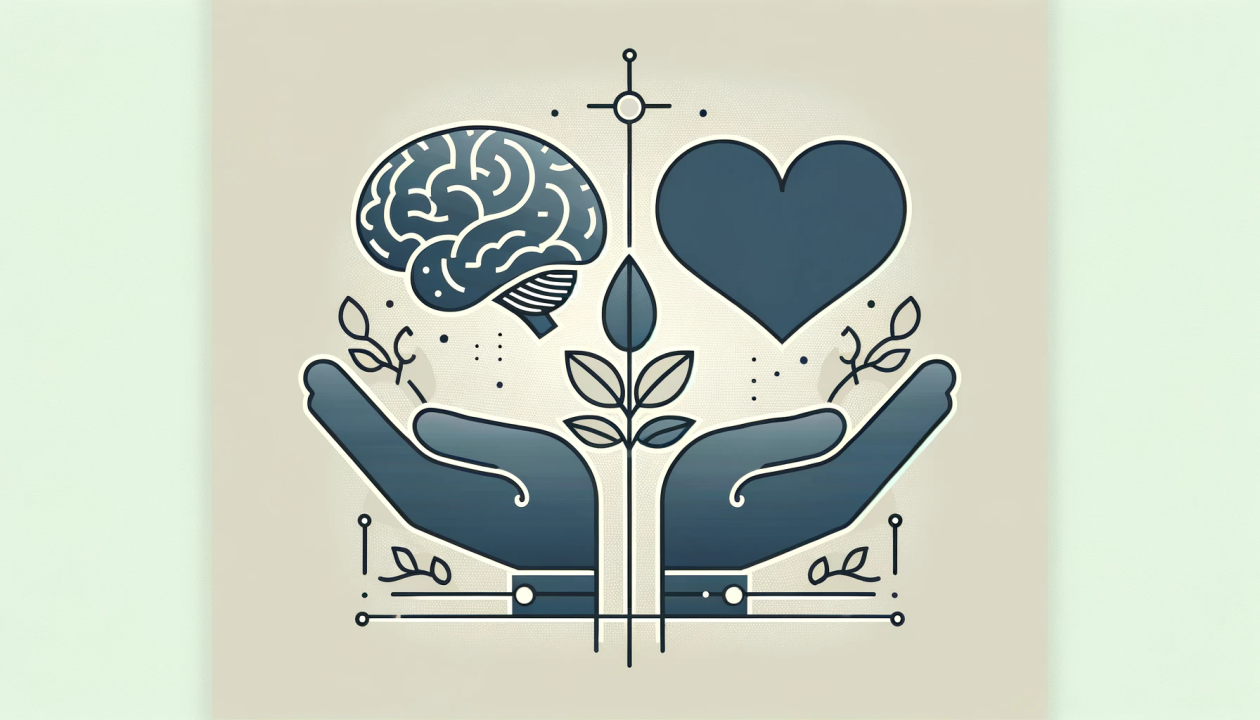
As you move forward in your own exploration, remember that you don’t have to choose between your head and your heart, between reason and reverence. The most complete understanding embraces both—honoring the empirical truths science reveals while remaining open to the transcendent dimensions that give life meaning and depth.
The power of harmony between spirituality and science isn’t just an abstract concept—it’s a lived reality available to anyone willing to bridge the gap within themselves. In doing so, we participate in one of the most important conversations of our time, one that has the potential to transform not only how we understand reality but how we inhabit it with greater wisdom, compassion, and wonder. 🌍