Our planet faces unprecedented environmental challenges, and regenerative living through permaculture offers a transformative pathway to restore ecosystems while meeting human needs sustainably.

The way we interact with our environment has reached a critical turning point. Climate change, soil degradation, water scarcity, and biodiversity loss threaten the very foundations of human civilization. Yet within these challenges lies an extraordinary opportunity: to reimagine our relationship with nature through regenerative practices that heal rather than harm. Permaculture stands at the forefront of this movement, offering time-tested principles and innovative techniques that work with natural systems rather than against them.
This comprehensive approach to sustainable living goes far beyond organic gardening or environmental conservation. It represents a fundamental shift in how we design our homes, communities, and food systems. By embracing permaculture principles, we can create abundance while regenerating the earth, building resilience in uncertain times, and leaving a positive legacy for future generations.
🌱 Understanding Permaculture: More Than Just Gardening
Permaculture, a term coined by Bill Mollison and David Holmgren in the 1970s, combines “permanent” and “agriculture” to describe a holistic design system. At its core, permaculture observes how natural ecosystems function and applies these patterns to human settlements, creating productive landscapes that mimic nature’s efficiency and resilience.
The beauty of permaculture lies in its universal applicability. Whether you live in a sprawling rural property or a compact urban apartment, these principles can transform how you grow food, manage resources, and interact with your surroundings. It’s about creating closed-loop systems where waste becomes resources, diversity strengthens stability, and every element serves multiple functions.
Unlike conventional agriculture that relies on external inputs and creates dependency, permaculture builds self-sustaining systems that become more productive over time. This regenerative approach doesn’t just maintain the status quo—it actively improves soil health, increases biodiversity, captures carbon, and creates microclimates that support life in all its forms.
The Three Ethics That Guide Regenerative Living 🌍
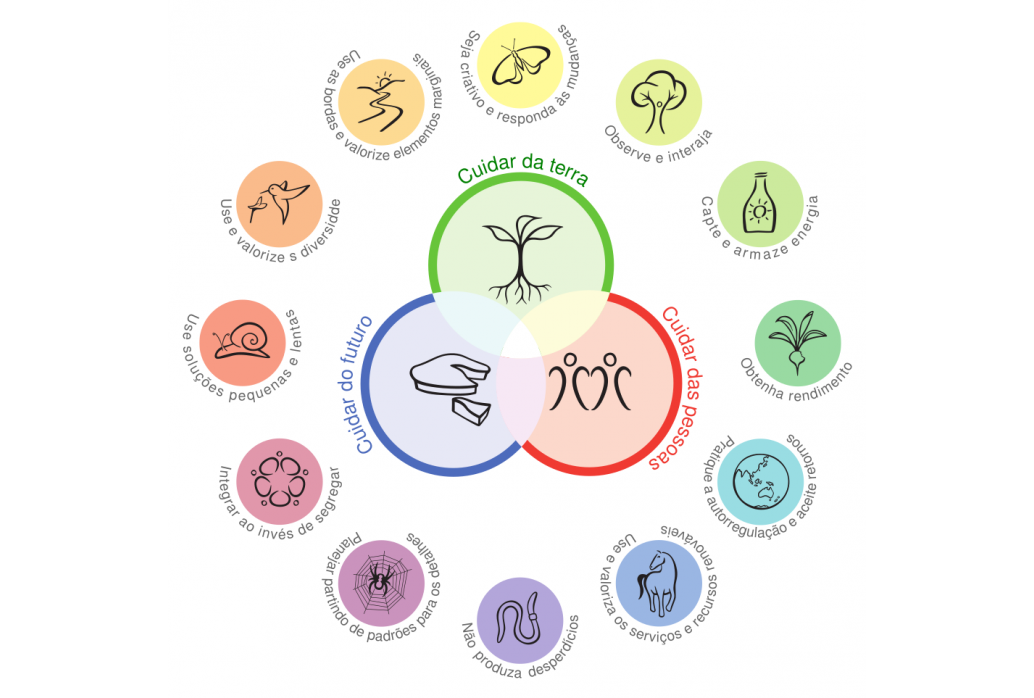
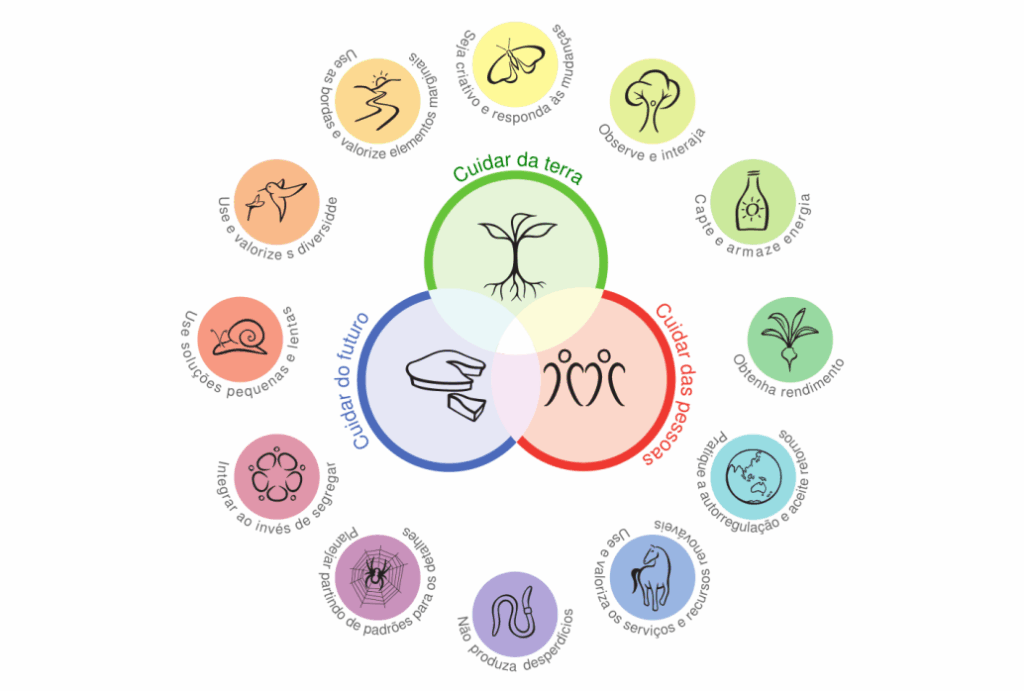
Permaculture rests on three foundational ethics that inform every decision and design element. These ethics provide a moral compass for creating truly sustainable systems that benefit people and planet alike.
Earth Care: Rebuilding Living Systems
Earth care means actively regenerating the natural systems that support all life. This goes beyond avoiding harm—it means leaving places better than we found them. Through practices like composting, water harvesting, building soil, and fostering biodiversity, we become partners in planetary healing rather than agents of destruction.
When we prioritize earth care, we recognize that healthy ecosystems provide the foundation for human wellbeing. Clean air, fertile soil, fresh water, and stable climates aren’t luxuries—they’re necessities that depend on functioning natural systems.
People Care: Creating Abundance for All
People care acknowledges that sustainable systems must meet human needs for food, shelter, education, and meaningful employment. Permaculture designs create abundance rather than scarcity, fostering cooperation instead of competition. This ethic extends to mental health, community connection, and cultural preservation.
By designing systems that require less external input and generate multiple yields, permaculture helps people achieve greater self-reliance and resilience. This doesn’t mean isolation—rather, it builds the foundation for healthier interdependence within communities.
Fair Share: Redistributing Surplus Responsibly
Fair share, sometimes called “future care,” recognizes limits to growth and consumption. Once our needs are met, surplus should be reinvested in earth care and people care rather than accumulated indefinitely. This ethic challenges the extractive mindset that has created our current ecological crisis.
Implementing fair share means questioning how much is enough, sharing knowledge and resources freely, and considering the needs of future generations in our present-day decisions. It’s about creating circular economies where abundance flows rather than accumulates.
🔄 The Twelve Permaculture Principles in Action
David Holmgren articulated twelve design principles that translate permaculture ethics into practical action. Understanding these principles helps us make decisions that create regenerative outcomes across all areas of life.
- Observe and interact: Spend time understanding your site before making changes. Nature reveals patterns and opportunities to those who watch carefully.
- Catch and store energy: Harvest resources when they’re abundant for use during scarce times—from rainwater collection to preserving food and generating renewable power.
- Obtain a yield: Design systems that produce useful outputs. If something doesn’t contribute value, reconsider its place in your design.
- Apply self-regulation and accept feedback: Create systems that self-correct and remain responsive to changing conditions without constant intervention.
- Use and value renewable resources: Prioritize solar, wind, biological, and water resources over finite fossil fuels and extracted materials.
- Produce no waste: Design closed-loop systems where outputs from one element become inputs for another, eliminating the concept of waste entirely.
- Design from patterns to details: Observe natural patterns—spirals, waves, branches—and apply them before getting lost in specifics.
- Integrate rather than segregate: Create beneficial relationships between elements so they support each other’s functions.
- Use small and slow solutions: Small-scale, incremental changes are easier to maintain and create less disruption than large, rapid interventions.
- Use and value diversity: Diversity builds resilience, reduces vulnerability to pests and diseases, and creates more productive systems.
- Use edges and value the marginal: The most productive and diverse areas occur where different systems meet—forest edges, shorelines, ecotones.
- Creatively use and respond to change: View change as opportunity rather than threat, remaining flexible and adaptive in uncertain times.
Building Your Regenerative Homestead: Practical Applications 🏡
Translating permaculture principles into reality begins with assessing your specific context—climate, soil, water, existing structures, and available resources. Every site is unique, and successful permaculture design works with what’s present rather than imposing predetermined solutions.
Water: The Foundation of Life
Water management represents one of permaculture’s most transformative applications. Rather than rushing water off-site through pipes and drains, regenerative design slows, spreads, and sinks water into the landscape. This recharges groundwater, reduces flooding and erosion, and creates hydration for plants throughout dry periods.
Techniques include installing rain gardens, constructing swales (level ditches that capture runoff), creating ponds that serve multiple functions, and harvesting rainwater from roofs for household and garden use. Even small-scale interventions like redirecting downspouts or creating shallow basins around trees can dramatically improve water retention.
Soil: Building the Living Foundation
Healthy soil teems with billions of organisms that cycle nutrients, store carbon, retain water, and support plant growth. Industrial agriculture has depleted soils worldwide, but regenerative practices can rebuild fertility remarkably quickly. Permaculture approaches to soil building include composting, mulching, cover cropping, and minimizing disturbance.
Rather than tilling—which destroys soil structure and releases carbon—permaculture favors no-dig methods that work with natural processes. Sheet mulching, for example, builds new garden beds atop existing grass by layering cardboard, compost, and mulch. Within months, this creates rich, friable soil without machinery or chemicals.
Food Forests: Edible Ecosystems
Perhaps the most elegant expression of permaculture design, food forests mimic woodland ecosystems while producing diverse harvests. These seven-layer systems include canopy trees (nuts, fruits), understory trees (smaller fruits, nitrogen-fixers), shrubs (berries, medicinals), herbaceous plants (vegetables, herbs), ground covers (strawberries, sweet potatoes), root crops, and climbing plants (grapes, beans).
Once established, food forests require minimal maintenance while producing abundant yields year after year. They build soil, create wildlife habitat, moderate temperature, and capture carbon—all while providing food security and beauty. Starting small with a few productive perennials and expanding gradually allows you to learn as you grow.
🌆 Urban Permaculture: Regeneration in Cities
The principles of regenerative living apply just as powerfully in urban contexts, where most people now live. Cities offer unique opportunities for permaculture implementation, from balcony gardens and rooftop farms to community gardens and urban food forests.
Container gardening becomes infinitely more productive when designed with permaculture principles—companion planting, vertical growing, succession planting, and choosing perennials alongside annuals. Even a small balcony can produce remarkable quantities of food when every dimension is utilized thoughtfully.
Urban permaculture extends beyond food production to include greywater recycling, composting systems for apartment dwellers, bicycle infrastructure, tool-sharing libraries, and neighborhood resilience networks. These interventions transform cities from consumption centers into productive, regenerative ecosystems that enhance rather than degrade surrounding natural systems.
The Social Dimension: Community Resilience Through Regeneration 🤝
While permaculture often focuses on ecological design, its social applications may be equally transformative. Regenerative living builds community bonds, creates meaningful work, preserves traditional knowledge, and develops local economies that circulate wealth rather than extracting it.
Community gardens, skill-sharing workshops, seed exchanges, and cooperative ownership models all embody permaculture’s social principles. These initiatives strengthen social fabric while building practical resilience against economic uncertainty and supply chain disruptions.
The transition movement, which emerged from permaculture thinking, demonstrates how neighborhoods and towns can systematically prepare for uncertain futures while improving quality of life today. Through local food networks, renewable energy cooperatives, and community-supported enterprises, transition initiatives prove that regeneration creates opportunity rather than sacrifice.
🌿 Regenerative Agriculture: Scaling Up Permaculture Principles
While home-scale permaculture transforms individual lives, regenerative agriculture applies similar principles at commercial scales. Farmers worldwide are demonstrating that large-scale food production can restore ecosystems rather than degrade them, producing nutritious food while sequestering carbon, rebuilding soil, and supporting biodiversity.
Techniques like managed grazing, agroforestry, cover cropping, and crop rotation create productive systems that improve over time. These methods often prove more profitable than conventional approaches once full costs are considered—eliminating expensive inputs, improving drought resilience, and commanding premium prices for superior products.
The regenerative agriculture movement represents agriculture’s most promising future—one where farmers become ecosystem managers who prosper by healing land rather than mining it. Supporting these farmers through conscious purchasing decisions accelerates the transition toward truly sustainable food systems.
Technology Meets Tradition: Modern Tools for Regenerative Living 📱
While permaculture draws heavily on traditional wisdom, modern technology can amplify its effectiveness. Apps for garden planning, plant identification, weather monitoring, and community connection help practitioners implement regenerative practices more successfully.
Digital platforms facilitate knowledge sharing, connecting experienced practitioners with beginners, cataloging local resources, and coordinating community projects. Online courses make permaculture education accessible worldwide, accelerating the spread of regenerative practices across diverse contexts.
The key is using technology appropriately—as a tool that supports rather than replaces direct observation, hands-on experience, and connection with place. When balanced thoughtfully, digital resources can significantly shorten the learning curve while building networks of mutual support.
🌍 Climate Resilience Through Regenerative Design
As climate instability intensifies, regenerative living provides practical strategies for adaptation and resilience. Permaculture systems, with their emphasis on diversity, local resources, and closed-loop processes, withstand shocks far better than industrial monocultures dependent on global supply chains.
Water harvesting protects against both drought and flooding. Diverse food sources buffer against crop failures. Local production networks ensure continued access to necessities despite distant disruptions. Healthy soils rich in organic matter moderate temperature extremes and resist erosion.
Beyond adaptation, regenerative practices offer the most scalable solutions for drawing down atmospheric carbon. Healthy soils can sequester enormous quantities of carbon dioxide, effectively reversing emissions while producing food and rebuilding ecosystems. This represents our most hopeful pathway through the climate crisis—not through sacrifice but through regeneration.
Starting Your Regenerative Journey: First Steps Forward 🚀
Beginning a transition toward regenerative living can feel overwhelming, but permaculture’s principle of “small and slow solutions” applies here too. Start with observation—spend time understanding your space, resources, and needs before making major changes. Read widely, take courses, visit demonstration sites, and connect with local practitioners.
Choose one area to focus on initially—perhaps starting a small garden, implementing composting, or establishing rainwater harvesting. As you gain experience and confidence, expand gradually into new areas. Success builds momentum, and early wins provide motivation for more ambitious projects.
Remember that permaculture is a learning journey rather than a destination. Mistakes provide valuable feedback, and every season brings new insights. By starting where you are with what you have, you begin creating positive change immediately while developing skills and knowledge for more complex implementations.
The Ripple Effect: How Individual Actions Create Systemic Change 💫
While individual adoption of regenerative practices matters tremendously, the true power emerges as these approaches spread throughout communities and society. Each productive garden inspires neighbors, every successful project demonstrates possibility, and shared abundance builds connections that strengthen social resilience.
As more people embrace permaculture principles, market demand shifts, influencing agricultural practices, urban planning, and policy decisions. Grassroots movements create pressure for systemic changes that accelerate transition toward regenerative systems at all scales.
Your journey toward regenerative living contributes to a global movement reimagining humanity’s relationship with the living world. By demonstrating that abundance and ecological healing can coexist—that we can meet human needs while restoring planetary health—you become part of the solution our world desperately needs.
The path forward requires courage, creativity, and commitment, but it also offers profound rewards: deeper connection with nature, greater self-reliance, vibrant health, meaningful work, and the satisfaction of leaving the world better than you found it. The regenerative future we need is being built one garden, one community, one decision at a time. The question isn’t whether to begin, but rather: what will your first step be?